
Finding your connection with nature
By Patrick Phillips, guest contributor.
Hello, I'm Patrick Phillips — a holistic Wellness Coach and the founder of Lawers Skai, a service for creating a unique mind and quality of life through nature, mindfulness, and creativity — designed for personal transformation, mental resilience, and long-term emotional wellbeing, with Compassionate Mind Training arriving in June 2027. What follows is the story behind it: not a business plan, but a journey — one that began long before I had a name.
My story did not begin with a grand ambition. It began, as so many things do, with a single moment of attention — and the slow realisation, over many years, of hard work and dedication to myself and those around me. Those important moments of my life were trying to tell me something.
I grew up carrying childhood wounds that quietly left their permanent mark: patterns of self-protection, of threat, of not quite feeling safe enough to simply be. All I knew was that certain places — and certain encounters with the natural world — made me feel, briefly but unmistakably, more myself. It would take four decades, a published essay about an apple tree, a walking tour business in the Scottish Highlands, and finally the science of the compassionate mind to understand why.
The Lowlands — An Apple Tree in Bloom
The first time I understood that nature could reach something in me that nothing else could, I was standing barefoot in an old farm orchard in the Lowlands of Scotland, in front of an apple tree in bloom.
I wrote about that moment in January 2017, in an essay published in Elsewhere: A Journal of Place. What I described was not dramatic. It was a slow walk across wet grass toward a tree. The scent of blossom. A flowering branch drawn toward me. And then something that shifted — before I had consciously decided to seek it.
"That sweet soft scent from an apple tree in bloom is a smell of profound amazement. The garden in which I am stood is not my own but was once a peasant's. It is not a garden of dreams but a garden from a single dream landscape. The apple tree, placed within this designed and ordered garden, has revealed to me that the tree itself is from outside the garden; here is not exactly where it intrinsically belongs. The apple tree and I live in that dream — together."
Standing in front of the tree, I felt its light intensify. At every moment I felt as though I was dissolving, quietly forgetting myself and the world I was once in. The apple tree asked nothing of me. It simply was — and in its presence, I was allowed to be.
That was my first teacher.
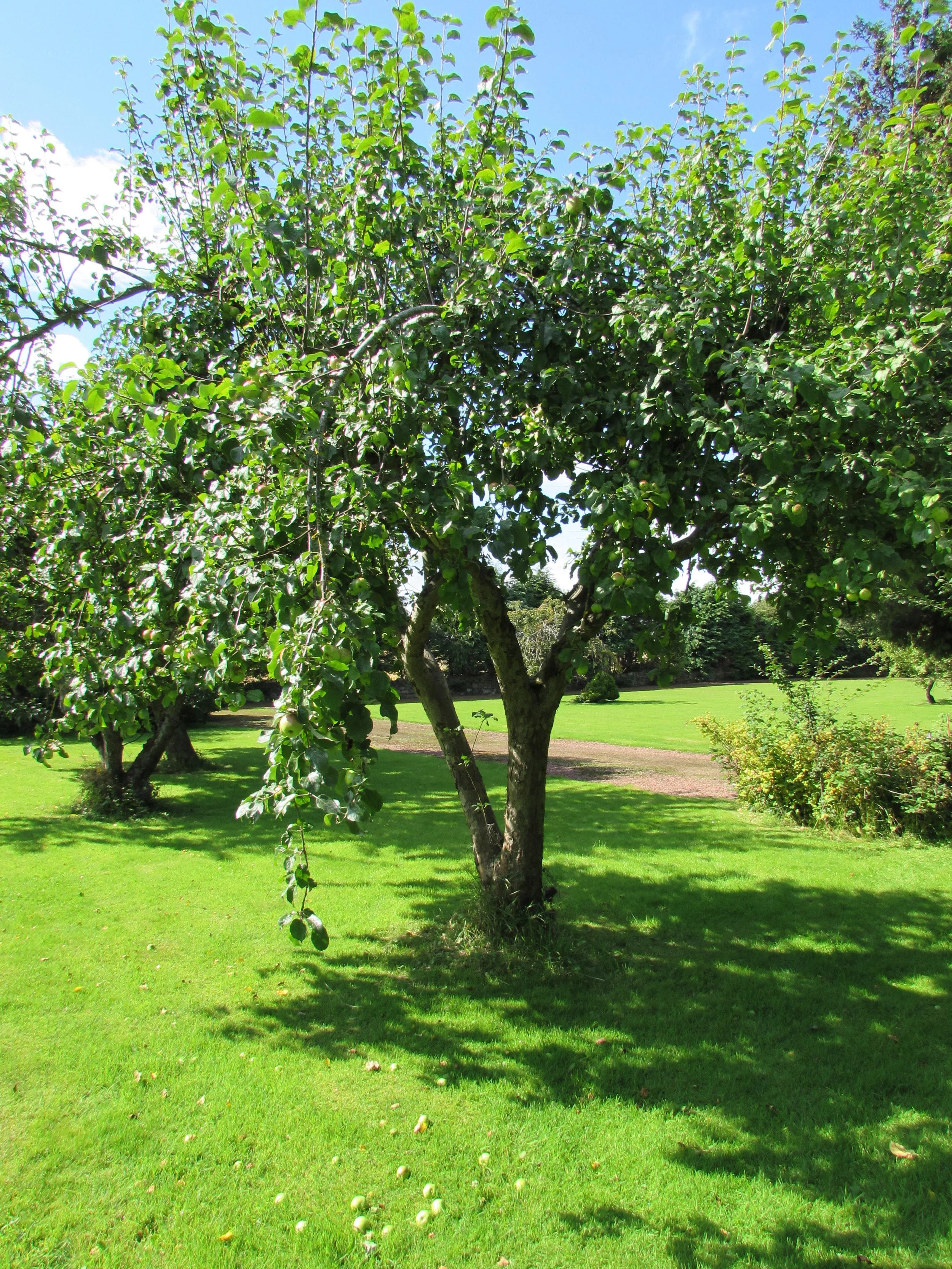
The apple tree from an old farm orchard that inspired my essay Blossoming Hands.
The Highlands — A Mountain Landscape That Did Not Abandon Me
Years later, in October 2019, I made a decision that surprised even me: to start my own walking tour guide business in the Scottish Highlands. A move to Inverness had not gone to plan, and I found myself returning to Killin — a small mountain village in the Southern Highlands, in the ancient landscape of Breadalbane — with a different quality of attention than I'd ever brought before.
What I found there was not what I expected. I found a landscape that asked something of me: to slow down, to pay attention, to acknowledge that I had perhaps abandoned it — but that it had not abandoned me. I owed the mountains a certain gratitude.
In my book Eternal Mountain: Essays from Afar, published in 2021, I tried to put into words what living alongside mountains over 500 million years old had given me:
"Life, therefore, is a story without end… With the mountains, I was able to experience for the first time in my life the weight and depth of my own soul; the deeper our connection with nature, the deeper our experience of life and therefore its richness and true meaning — our destiny."
Climbing Ben Lawers for the first time, I understood this not as philosophy but as physical experience: as I went further up the mountain, the weather began to change, and so did the quality of my being — becoming more eternal in a felt sense. When you reach the summit, you realise you have not arrived at a peak but at an elsewhere — a new landscape, an internal shape of a mountain, a new way of being.
Between the rocks and water of Breadalbane, I found what I came to call sanctuaries — places of rest, inspiration and rejuvenation. It is not long before one's essence feels restored; not long before contentment returns.
That was my second teacher.
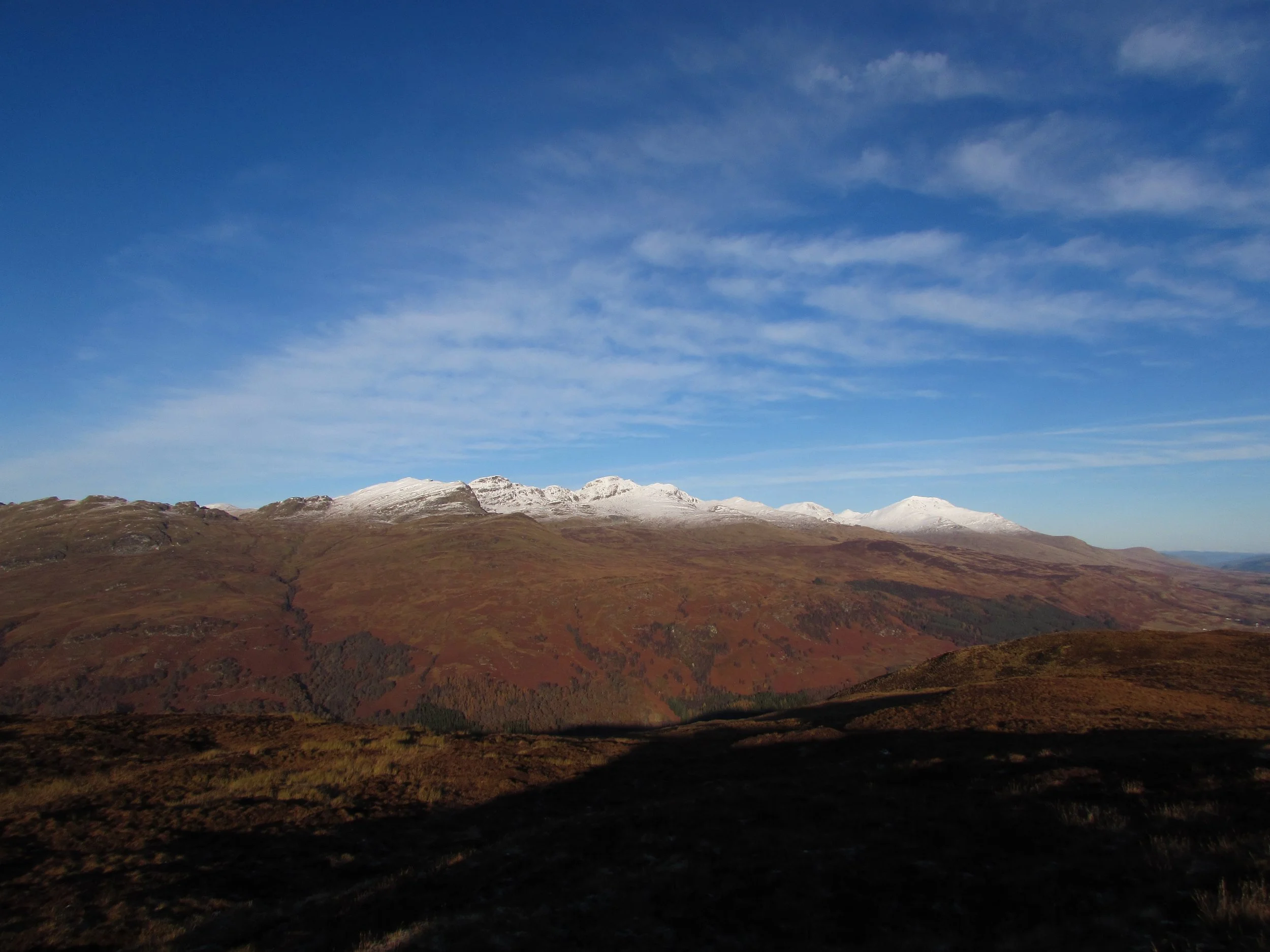
View of Meall nan Tarmachan and Ben Lawers from Sròn a' Chlachain
The Compassionate Mind — Understanding the Wound
Nature had shown me what was possible. But it could not, on its own, explain why I had spent so many years unable to finally root myself in some way — why the soothing system, as compassion science calls it, had felt so foreign and so fragile.
The answer came through the science of the compassionate mind — specifically through the work of Professor Paul Gilbert and the framework of Compassion Focused Therapy, which I will begin studying this September, through the Diploma in the Science and Application of the Compassionate Mind.
What this science gave me was a language for something I had lived without words for many years. For example, it helped me understand how my early childhood experience of domestic violence had organised my brain for threat and self-protection — making self-protection not a choice but an automatic reaction that persisted long into adulthood, closing me off from exactly the warmth and belonging I most needed, from myself, and from others. This is why I am so dedicated to Compassionate Mind Training — not simply as an academic interest, but as work based upon lived experience, and therefore as a genuine way of helping others, so that they too can flourish.
It helped me understand why the apple tree and the mountain had reached me when so much else of modern society did not: because in the presence of nature, for the first time, my threat/self-protection system remained unactivated. Nature, it turned out, had been offering me a way of soothing all along. I had simply not yet learned how to activate the soothing system by myself. The compassionate mind did not replace what nature and creativity had taught me. It completed it — giving the whole journey a framework, and finally, a way of offering the same transformation to others.
This was my third teacher.
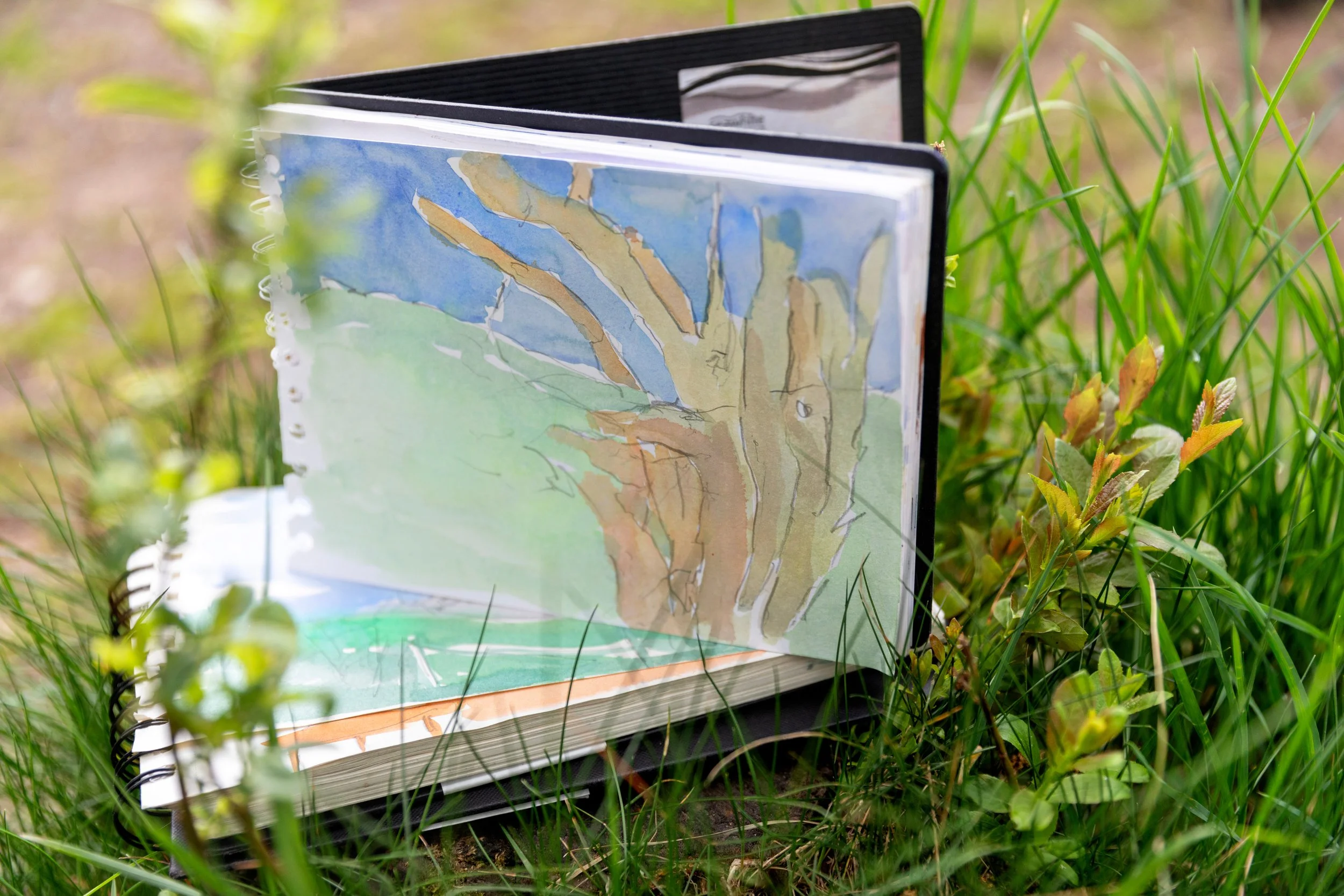
Self-actualisation: a watercolour sketch from my sketchbook, part of finding my own artistic expression.
Lawers Skai — A Foundation Built from All Three
Lawers Skai was founded from this journey. Not as a theory, but as a lived sequence of experiences — a difficult childhood, continuous creative expression, an orchard, a mountain, the science — that together revealed what a genuine, long-term quality of life actually requires once understood and applied.
The name carries the landscape within it. The four pillars — nature, creativity, mindfulness, and the compassionate mind — are not a curriculum I assembled from the outside. They are the four things that, one by one, gave me back my life.
This is what I offer you: not a wellness plan designed by someone who has read about transformation, but a practice built by someone who has lived it — across four decades, through a deeply wounded childhood, an apple blossom, mountain summits, and ancient rock, and finally through the science that made sense of everything that came before.
"Once you have found your connection with nature, then you will know who you really are." — Patrick Phillips, Wellness Coach Scotland, 2025
If you are ready for something genuinely different — a long-term investment in creating a unique mind and quality of life based upon who you truly are — 1:1 wellness coaching with Lawers Skai may be the right step for you.
Patrick Phillips is a wellness coach whose work is rooted in nature, creativity, mindfulness, and compassionate mind training. Find out more here.