
Perimenopause: what’s actually going on — and what can you do about it?
If you're somewhere in your 40s and you've suddenly started wondering why you don't quite feel like yourself anymore, you're not imagining it.

Maybe your periods have become unpredictable. You're sleeping badly. You're more tired than usual. You're feeling more anxious or irritable. Your brain seems to have developed a frustrating habit of forgetting why you walked into a room. Your body feels different. Maybe you're gaining weight more easily, or your usual exercise routine doesn't seem to have quite the same effect.
And then there's the noise on social media. Eat 30 plants a week, stop eating carbs after 6pm, lift heavy weights, avoid alcohol, take six supplements, balance your hormones, fix your gut and somehow meditate for 20 minutes a day.
No wonder we're confused. So let's have a closer look.
First, what actually happens during perimenopause?
Perimenopause is the transition towards menopause. It usually begins in your 40s, although it can happen earlier or later.
During this time, your ovaries gradually produce less oestrogen, but it isn't a nice, steady decline. Hormone levels can fluctuate quite a lot. Ovulation can become less predictable, periods can change, and eventually periods stop altogether.
And because oestrogen interacts with so many systems in the body, those hormonal changes can show up in lots of different ways.
You might experience hot flushes and night sweats, but you might also notice changes in sleep, mood, anxiety, concentration, memory, libido, headaches, joint and muscle aches, body composition or your menstrual cycle.
Not everyone experiences the same symptoms. Some women barely notice the transition; for others, it can have a significant impact on everyday life.
And this is important: you don't have to just put up with symptoms because "it's just menopause".
There are medical treatments and other forms of support available, including HRT and non-hormonal options. If symptoms are affecting your quality of life, it's worth talking to your GP or another appropriate healthcare professional.
But there are also some very unglamorous things that can make a surprisingly big difference.
Start with the boring basics
I know. You were probably hoping for a magical food or supplement. But this is actually where I'd start.
Eat proper meals
This is one of the things I come back to again and again with my clients. Instead of constantly asking "What food should I avoid because I'm in perimenopause?", ask: "What does my body need from this meal?"
Think: Protein + fibre-rich carbohydrate + vegetables/fruit + healthy fat
For example, eggs on wholegrain toast with avocado and tomatoes / Greek yoghurt, berries, oats, nuts and seeds / lentil and vegetable curry with brown rice / salmon, potatoes and a big pile of vegetables / chickpea salad with wholegrain bread and olive oil
There isn't a single "menopause diet". A varied, Mediterranean-style pattern — with plenty of vegetables, fruit, wholegrains, pulses, nuts, seeds, fish or other protein sources and unsaturated fats — is a sensible foundation.
And yes, carbs are allowed.
In fact, wholegrains, potatoes, beans, lentils, oats and other fibre-rich carbohydrates can be incredibly useful foods to have in your diet.

Pay attention to protein
Muscle mass naturally becomes more important as we get older, and getting enough protein alongside resistance exercise is part of looking after your strength and long-term health.
You don't need to obsess over grams if that makes eating stressful. Instead, make protein something you deliberately include at meals: eggs, yoghurt, fish, chicken, tofu, tempeh, beans, lentils, nuts and seeds are all options.
Move your body — but don't make exercise another stressor
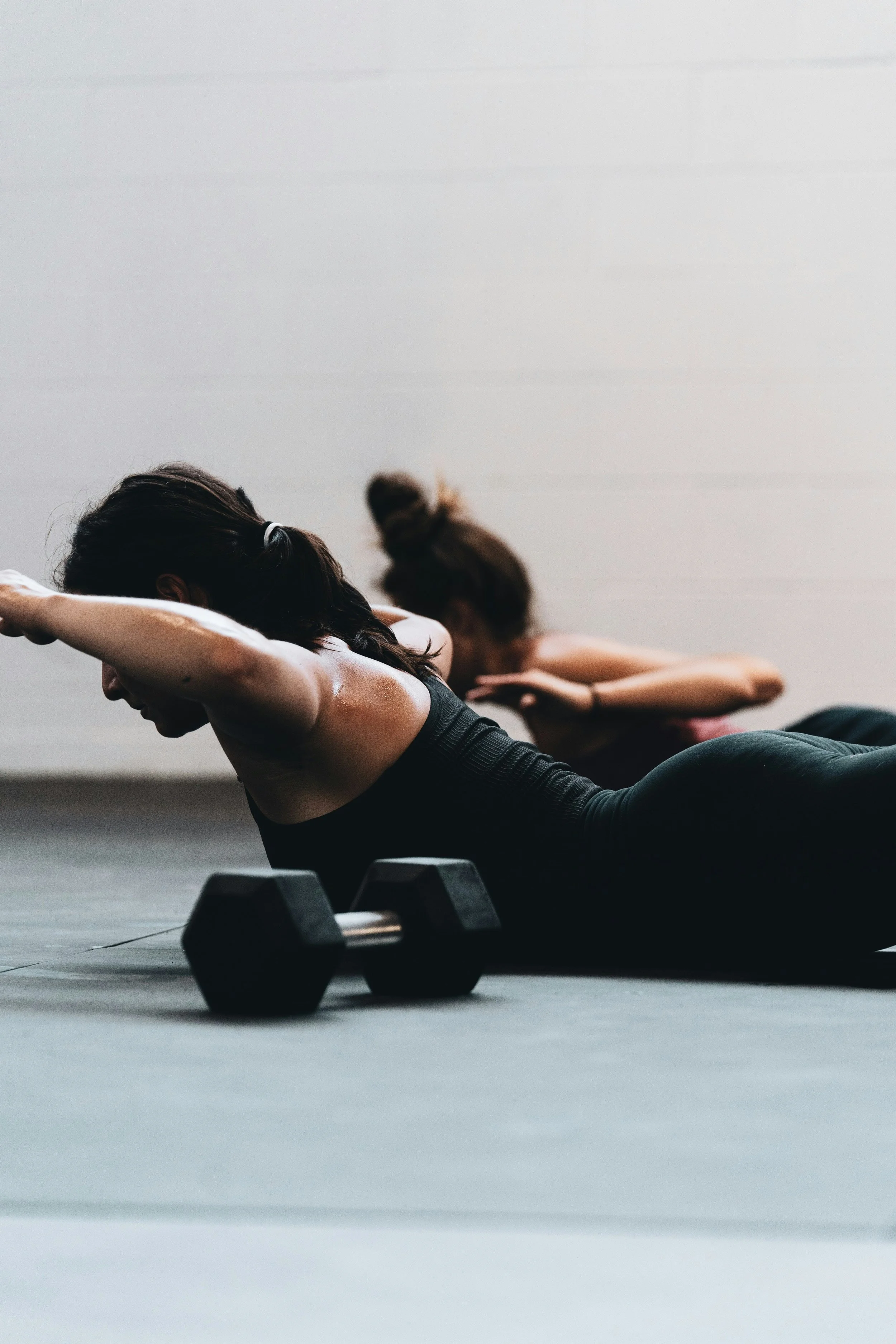
Strength training is particularly valuable as we age, but you don't need to suddenly become a gym person.
Walking counts. Running counts. Swimming counts. Dancing counts. Yoga counts.
And resistance training is worth making room for if you can.
The goal isn't to punish your body into submission because your metabolism has "slowed down". It's to support muscle, bones, cardiovascular health, mood, sleep and your ability to do all the things you want to keep doing.
And then there's sleep...
This one is tricky because perimenopause itself can disrupt sleep. Night sweats can wake you up. Hormonal changes can affect sleep. And then you're exhausted the next day, which can make everything else feel harder.
So yes, sleep matters. But this is where I think we sometimes need to zoom out.
Because perhaps you're not sleeping because you're worried about your teenager. Or because work is stressful. Or because you're looking after aging parents. Or because you're running a business, managing a household, organising everyone's lives and trying to remember whether you put the washing in.
Perimenopause may be part of the picture. But it may not be the whole picture.
Not everything is perimenopause.
This might be my most important point.
Perimenopause gets blamed for a lot. And sometimes quite reasonably. But fatigue, anxiety, poor sleep, low mood, brain fog and feeling overwhelmed aren't exclusive to hormonal changes.
They can also be caused or worsened by chronic stress, lack of sleep, under-eating, alcohol, too much caffeine, life circumstances, low mood, anxiety, certain medications or other health conditions.
And sometimes it's several things at once. Imagine you're already running on empty because you've been sleeping badly for six months. Then your hormones start fluctuating. Suddenly the same stressful day that you used to cope with feels completely overwhelming.
Is it hormones? Possibly.
Is it stress? Possibly.
Is it sleep? Probably.
Is it all three? Very possibly.
This is where looking at your lifestyle as a whole can be so useful. What are you eating? How are you sleeping? How much are you moving? How much time are you actually spending recovering? What is your stress load? Are you expecting yourself to function at 100% while giving yourself approximately 5% recovery?
Those questions can be just as useful as asking whether your hormones have changed.
So, where would I start?
If you're wondering whether perimenopause might be playing a part in how you're feeling, don't try to overhaul your entire life next Monday.
I'd start here:
1. Eat regular, balanced meals.
Build meals around protein, fibre-rich carbohydrates, vegetables or fruit and healthy fats.
2. Get stronger.
Add some form of resistance training to your week, alongside movement you actually enjoy.
3. Protect your sleep.
Look at both your sleep habits and what's getting in the way of sleep.
4. Look at your stress load.
Not just how to "manage stress", but whether your life currently contains more demands than your body has capacity for.
5. Be wary of nutrition noise.
You don't need a special menopause diet, a cupboard full of powders or a list of 25 foods you're no longer allowed to eat.
6. Get help when you need it.
If symptoms are affecting your quality of life, speak to your GP or another qualified healthcare professional. You don't get extra points for struggling through it alone.
And perhaps most importantly: Don't wait until you're completely burnt out before you start looking after yourself.
Your 40s aren't a problem that needs fixing. But they can be a really useful opportunity to pay a bit more attention to what your body is asking for.
Less noise. More nourishment. More strength. More recovery. And a lot less guilt about any of it.
Want to work out what's actually going on? This is exactly the kind of thing I help women untangle in my coaching.
Rather than handing you another list of foods you're supposed to eat or habits you're supposed to have, we look at the bigger picture — your nutrition, energy, sleep, stress and daily routines — and work out what would actually make a difference in your life.
Because sometimes the answer really is perimenopause. Sometimes it's stress. Sometimes it's what you're eating.
And very often, it's a bit of everything.
You don't need more health advice. You need to know what applies to you.